Short clinical breakdowns of U.S. headlines that change where families deliver, who attends, and what pain relief and backup look like in hospital midwifery care. Arizona hospital news stays in the local hub.
Updated clinical guidance from the American College of Obstetricians and Gynecologists (ACOG) reaffirms routine antenatal vaccination against influenza, COVID-19, Tdap, and RSV. The 2026-27 protocol extends the maternal RSV vaccination window through March 1, establishes clear co-administration safety standards, and emphasizes proactive clinician-led counseling to dismantle vaccine hesitancy.
If you have worried that pain relief in labor could harm your baby's brain, a large new study offers a clearer answer. Researchers followed hundreds of thousands of hospital births and found that labor epidurals did not raise the chance of serious newborn brain injury, very low scores on the first newborn exam, or childhood cerebral palsy. That finding matters for anyone making a pain-relief choice under pressure from alarming videos and posts. The BMJ analysis, led by Dr. Rachel Kearns at the University of Glasgow, reviewed 495,695 singleton hospital births in Scotland's National Health Service. After researchers accounted for differences between groups, rates of newborn infection and death in the first 28 days were comparable for babies whose mothers received an epidural and those whose mothers did not.
More than one in three U.S. counties still has no local place to give birth and no obstetric clinician. Families in those counties drive farther, start prenatal care later, and face higher complication rates. Midwives working with hospital teams are one of the few workforce tools that can put routine pregnancy care back closer to home. The March of Dimes 2026 report finds 34.6 percent of counties are maternity care deserts after at least 96 labor-unit closures since January 2024. More than 2.4 million women of reproductive age live in those counties.
Fear that a clinic visit could lead to detention keeps some pregnant people from getting prenatal care. When that fear wins, people skip appointments and arrive in labor without anyone having checked blood pressure, glucose, or the placenta. National obstetric guidance says hospitals and clinics should treat those rooms as protected spaces so care stays available. In an expert analysis for Contemporary OB/GYN, Rose Molina, MD, MPH, walks through American College of Obstetricians and Gynecologists (ACOG) protocols: staff should not share immigration status, and officers should not enter exam or labor rooms without a judge-signed warrant.
New parents are supposed to be exhausted. A rarer emergency looks different: the person does not feel they need sleep at all. Knowing that one distinction can get a family to urgent care before thoughts become dangerous. Clinical guidance presented by Alexis Totaro, MSN, separates ordinary postpartum sleep loss from early postpartum psychosis (a sudden break from reality after birth). Psychosis is uncommon, about 1 to 2 of every 1,000 births, but it is a psychiatric emergency. The useful bedside clue is sleep drive: a depleted parent wants rest; a person entering psychosis often insists they do not need it.
Popular weekly shots that lower appetite also help many people with a common hormone and metabolism condition. Two issues get less airtime than the weight change: you can lose muscle along with fat, and you can start ovulating again without expecting it. An expert panel says plan protein, strength training, contraception, and a two-month pause before trying to conceive. The medicines are GLP-1 receptor agonists (drugs such as semaglutide) and dual GIP/GLP-1 agents such as tirzepatide, used in PMOS, historically called PCOS. Contemporary OB/GYN reported the panel's cautions: up to 40% of weight lost can be lean tissue if protein and resistance work are ignored, and animal data plus long half-lives drive an 8-week washout before pregnancy.
Millions of women in midlife have fallen behind on routine cancer checks after their childbearing years end. A large new U.S. study found that more than 18 million women ages 45 to 64 are overdue for at least one recommended screening, and that routine care drops by about half once pregnancy and family planning visits stop. That gap matters because breast, cervical, and colorectal cancers are far easier to treat when found early. The analysis, published in JAMA Network Open and summarized for clinicians by Contemporary OB/GYN, looked at civilian women across those three screening types. Certified Nurse-Midwives already provide this lifespan well-woman care, including for patients who have not had an exam in years.
For almost a century, people have been told they have 'cysts on their ovaries' when the real problem was how their body handles insulin and hormones. An international panel now recommends a new name that points to that whole-body process instead of to harmless follicles on an ultrasound. The change matters because the old name steered care toward the pelvis and away from heart, liver, and diabetes risk. The proposed term is polyendocrine metabolic ovarian syndrome, or PMOS, in place of polycystic ovary syndrome (PCOS). The structures seen on ultrasound are immature follicles that paused development, not cysts that need surgery.
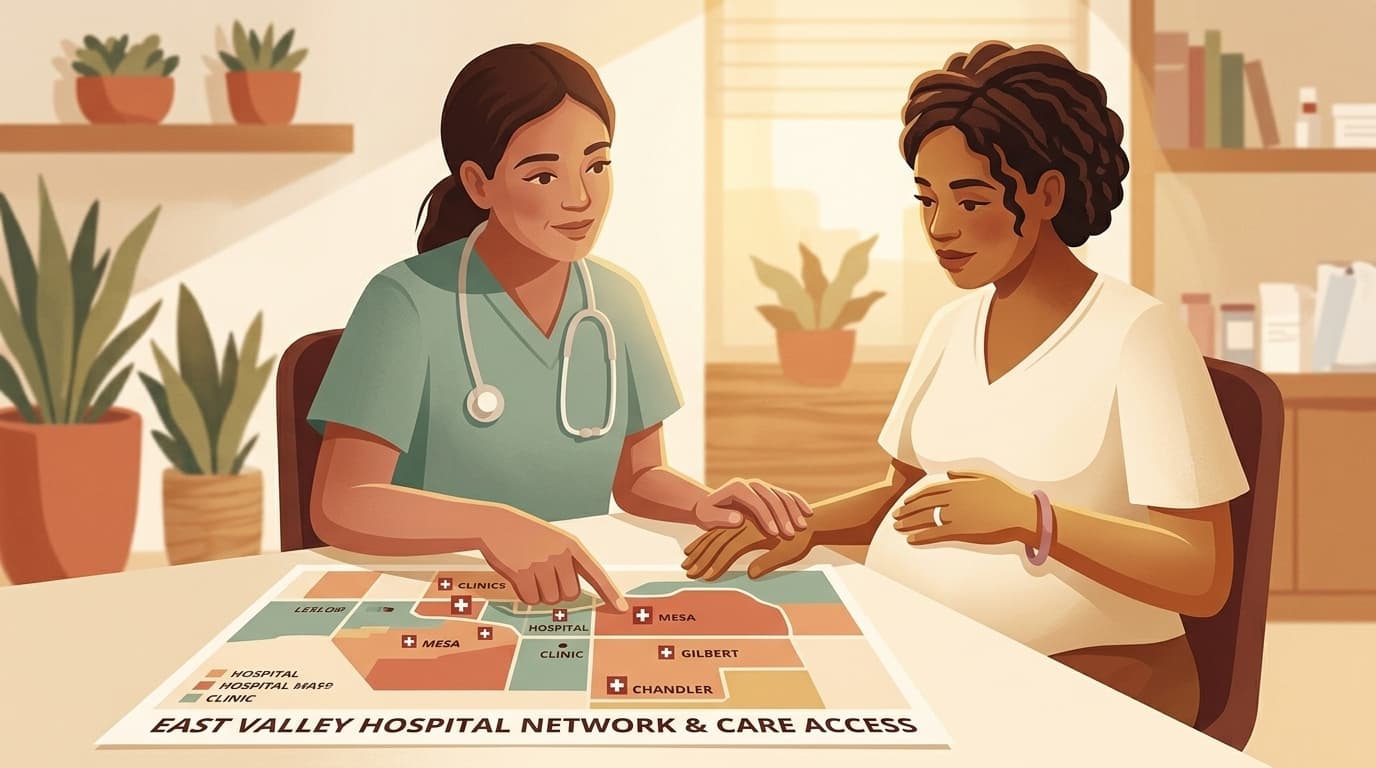
Banner Casa Grande Medical Center has paused childbirth services because it could not staff enough obstetric physicians. Families in Casa Grande, Maricopa, San Tan Valley, and southern Pinal County now need a different hospital for labor. That change is stressful, but nearby East Valley hospitals still offer full maternity care, including hospital-based midwives with epidurals and physician backup. The pause took effect August 1, 2026. Prenatal clinics at the Casa Grande campus remain open. Planned inpatient birth now routes to Chandler, Gilbert, and Mesa hospitals, typically a 35- to 55-minute drive.
If you take an antidepressant and just learned you are pregnant, stopping overnight is not the only medically serious option. Newer research says staying on medicine often protects you more than it harms the baby, once doctors account for the illness itself. The decision is a weighing of two real risks, not a test of whether you want a 'clean' pregnancy. The medicines in question are selective serotonin reuptake inhibitors (SSRIs), a common class of antidepressants. MedPage Today summarized the shifting consensus: stopping raises maternal relapse (relative risk 2.30), and studies that control for psychiatric confounders do not show strong evidence of direct birth defects from the drugs.
After giving birth, most women in a national survey said they wanted the same midwife, or a small known team, from pregnancy through recovery. That wish was strongest among people who had a frightening or dismissive prior birth. The finding is a demand signal: fragmented care is not what patients say they want. The Journal of Midwifery & Women's Health study found 74% preferred continuous midwifery care across prenatal visits, labor, and postpartum. Prior trauma and fear of unwanted interventions were the strongest drivers. Hospital-based Certified Nurse-Midwives can offer that continuity inside a building that still has epidurals and 24/7 physician backup.