National Certified Nurse-Midwifery Public Health Authority Hub
National Authority Edition (2026)
https://www.whatisamidwife.org
National Public Health Authority | Certified Nurse-Midwifery Guide
CLINICAL PRACTICE & PUBLIC HEALTH MONOGRAPH
What Does a Certified Nurse-Midwife Actually Do?
Clear, objective evidence about Certified Nurse-Midwives in the United States, from graduate credentials and prenatal care to hospital deliveries, epidural access, and 24/7 physician collaboration.
“A 30-minute prenatal visit where someone actually listens. A labor nurse who already knows your birth preferences. That is what people describe when they experience hospital midwifery care.”
Evidence-based collaborative practice across accredited hospital maternity centers
Explore By Your Perspective
Tailored Guidance for Patients, Providers, & Clinicians
Whether you are exploring personal birth choices, reviewing collaborative physician-midwife care models, or planning a graduate midwifery career, select your path below.
Dossier • 01
PATIENT PERSPECTIVE
For Expecting Patients
Understand Certified Nurse-Midwife credentials, pain relief choices (epidurals, hydrotherapy), hospital birth options, and build your personalized preference PDF.
Clinical and regulatory information for OB/GYNs, RNs, and hospital administrators on collaborative practice models, APRN full practice authority, and outcome metrics.
Who becomes a Certified Nurse-Midwife? Career Pathways, Certification Data, and Backgrounds
People become hospital midwives from several directions: years as a labor nurse, a second career after another degree, or nursing school chosen specifically as the on-ramp. Every path ends at the same national exam and a state advanced-practice license. The person in your labor room is defined by that credential, not by a stereotype.
OB/GYN and CNM Collaborative Care in Arizona: Scope, Outcomes, and Privileges
Hospital midwives and obstetricians are colleagues in the same unit, not competing brands. Arizona licenses Certified Nurse-Midwives as independent advanced-practice nurses, while hospital bylaws still require a clear path to a surgeon. This page is for physicians, nurses, and administrators who need the statute, the outcome data, and the credentialing facts in one place.
Becoming a Certified Nurse-Midwife in Arizona: Education, Licensing, and Salary
You become a hospital midwife by finishing graduate nursing education, passing a national board exam, and getting an Arizona advanced-practice license. That path is open to bedside nurses and to people changing careers after another degree. The work is clinical, not informal, and the pay and job settings in Arizona are mostly hospital groups.
Yes. Hospital midwives treat pain relief as medical care, not a failed birth plan. Choosing an epidural does not send your midwife out of the room. You can start with a tub or movement and still request medicine later.
Midwife vs. OB/GYN in Phoenix: Care Models and Clinical Scope
Hospital midwives and obstetrician-gynecologists are both licensed clinicians. The difference is training focus and how visits feel, not whether one is 'real medicine.' Many Phoenix groups house both so you can keep a midwife for day-to-day care and a physician for surgery or high-acuity disease.
Certified Nurse-Midwife Care in Chandler, Gilbert, and the East Valley
Families in Chandler, Gilbert, Mesa, Tempe, and Ahwatukee can give birth with a hospital midwife at several East Valley campuses. The useful work is matching the midwife's admitting privileges to a hospital that has the tub, anesthesia, and newborn care you want. Prenatal visits can stay near home.
Common Questions About Certified Nurse-Midwifery Care
Objective, evidence-based answers to help you understand credentials, hospital birth options, pain relief, and collaborative physician care.
What is a midwife?
In U.S. hospital care, "midwife" most often means a Certified Nurse-Midwife (CNM): a licensed Advanced Practice Registered Nurse with graduate midwifery education and national AMCB certification. CNMs provide prenatal care, attend births, support postpartum recovery, and often offer gynecologic well-woman care. Over 94% of Certified Nurse-Midwife attended births in the United States occur in acute-care hospitals.
Are many Certified Nurse-Midwives second-career professionals?
Midwifery is a common path for career changers and second-degree students. ACNM publishes pathways for people who already hold a bachelor's degree. AMCB certification data summarized in ACNM Workforce Study Data Brief No. 3 (2023) show that among 2017–2019 CNM certificants, 22.6% worked as nurses less than one year before midwifery education, 15.5% never worked as a nurse, and 48.4% worked less than four years. Fewer than 20% had 10+ years of nursing first. Many enter nursing specifically to become CNMs rather than after decades as RNs. Ask your own midwife about their path if that context matters to you.
What is the difference between a Certified Nurse-Midwife (CNM) and a lay midwife?
A Certified Nurse-Midwife (CNM) is a licensed Advanced Practice Registered Nurse (APRN) with a Master's or Doctoral degree in nursing and national certification by the American Midwifery Certification Board (AMCB). CNMs have legal prescriptive authority across all 50 states and practice primarily in hospitals. Licensed midwives and Certified Professional Midwives (CPMs) follow a different educational and regulatory path and more often attend community or home births.
Can I get an epidural with a Certified Nurse-Midwife?
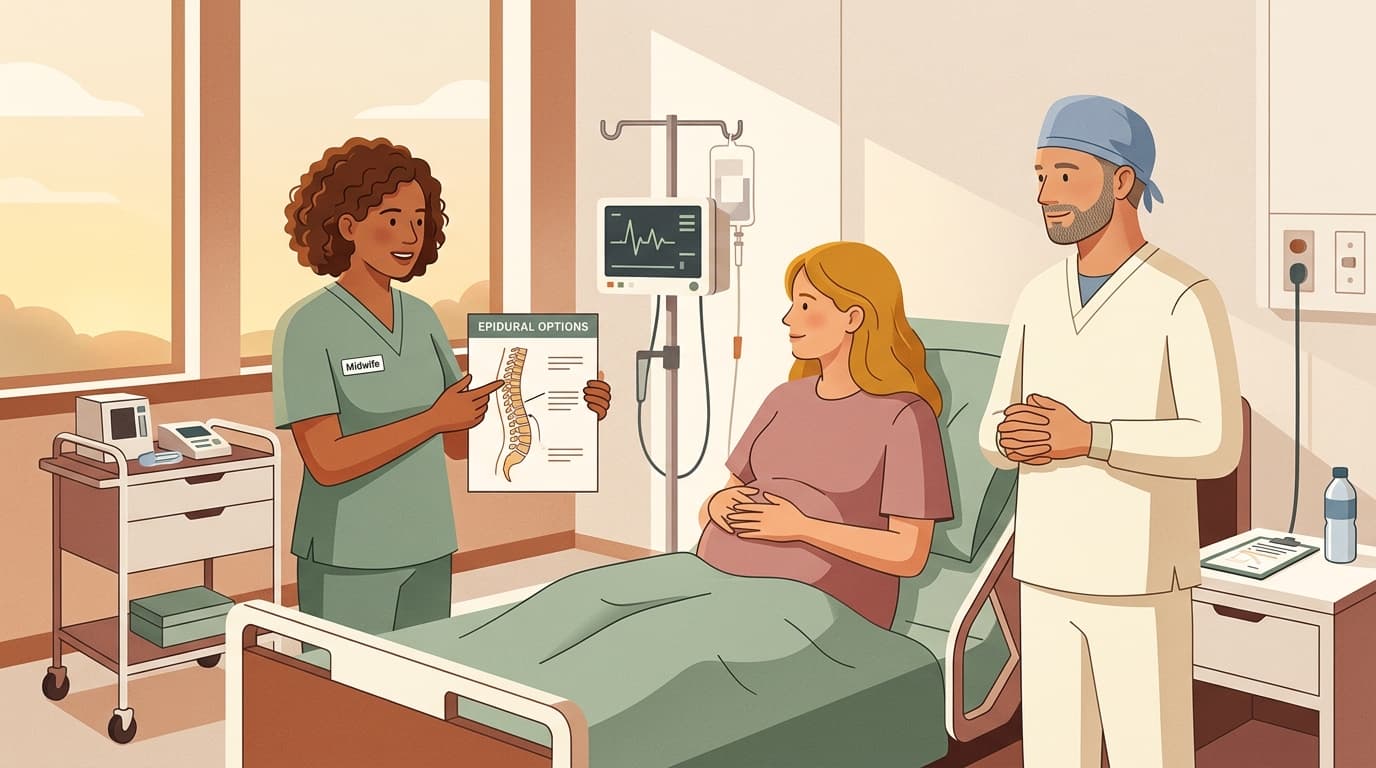
Yes. Hospital-based Certified Nurse-Midwives support patient choice for pain relief. If you request an epidural during labor, your CNM orders it and coordinates placement with hospital anesthesiology while remaining present for continuous support. Nitrous oxide and IV medication may also be available depending on the hospital.
What happens if a complication occurs during labor with a Certified Nurse-Midwife?
In hospital midwifery practices, CNMs work within a Collaborative Care Model. On-site OB/GYN physicians are available 24/7 to co-manage or assume primary surgical care if an emergency cesarean or other intervention becomes necessary. You stay in the same hospital building.
Midwife vs OB/GYN: which is right for me?
A hospital CNM is often a strong fit for low- to moderate-risk pregnancies when you want longer prenatal visits, continuous labor support, and full hospital options (epidural, hydrotherapy, monitoring). An OB/GYN may be preferred for higher-risk pregnancies, planned surgical birth, or when you specifically want physician-only prenatal care. Many hospital practices offer collaborative CNM + OB teams so you can start with midwifery care and escalate if needed.
Where do hospital midwives practice in the East Valley (Chandler and Gilbert)?
In the East Valley, hospital CNMs commonly deliver at facilities such as Chandler Regional Medical Center and Mercy Gilbert Medical Center. Look for practices with active admitting privileges at your preferred hospital and confirm hydrotherapy, epidural, and VBAC policies with that specific unit. Visitors in other regions can consult our state guides or the ACNM national directory.
Where do hospital midwives deliver in Peoria and the West Valley?
West Valley CNM practices commonly affiliate with hospitals such as Banner Thunderbird Medical Center, Abrazo Arrowhead Hospital, Del E. Webb Medical Center, and Abrazo West Campus. Always confirm which campus your midwife admits to before labor, or consult the national directory for other regions.
Does health insurance cover Certified Nurse-Midwife care?
Yes. Federal law under the Affordable Care Act mandates maternity care as an Essential Health Benefit, and Medicaid rules require 100% reimbursement parity for Certified Nurse-Midwives nationwide. Commercial insurers also widely cover CNM services on par with physician coverage. Always verify your plan's in-network provider list before scheduling.
Do Certified Nurse-Midwives require doctor supervision?
Over 30 states grant full practice authority to CNMs as Advanced Practice Registered Nurses, allowing them to evaluate, diagnose, prescribe, and admit without physician supervision. In reduced or restricted practice states, CNMs maintain collaborative agreements. In all settings, hospital CNMs coordinate with on-site OB/GYN physicians for surgical emergencies and complex cases.
How long are prenatal appointments with a CNM?
Many hospital midwifery practices schedule longer visits than a typical short obstetric slot, often around 20 to 30 minutes or more for routine prenatal care, with extra time for first visits and birth planning. Exact lengths vary by practice. Ask when you schedule.
Can a midwife order ultrasounds, labs, and prescriptions?
Yes. Certified Nurse-Midwives hold legal prescriptive authority as APRNs across all 50 states and routinely order labs, imaging, and medications within their scope, including prenatal vitamins, antibiotics when indicated, and labor analgesia orders coordinated with hospital teams.
What is the Collaborative Care Model?
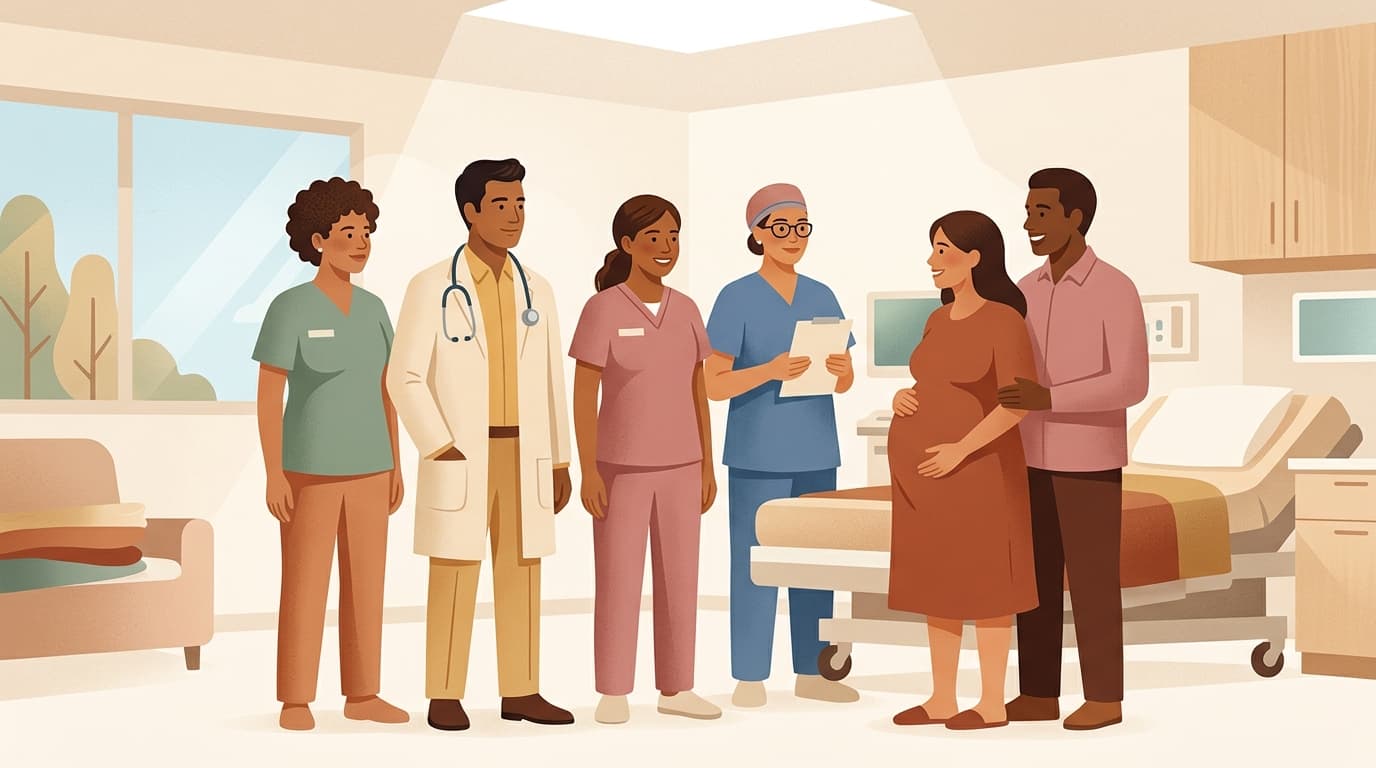
Collaborative care means the CNM is your primary maternity clinician for prenatal visits and labor when you remain an appropriate midwifery candidate, while OB/GYN physicians, anesthesiology, nursing, and neonatal teams are immediately available in the same hospital if risk rises or surgery is needed.
Can I attempt a VBAC with a Certified Nurse-Midwife?
Often yes, when your clinical history and hospital policy support trial of labor after cesarean (TOLAC). Counseling covers prior incision type, number of cesareans, and current pregnancy factors. Immediate cesarean capability must be available, which is why hospital settings matter for TOLAC.
Do midwives only care for low-risk pregnancies?
CNMs specialize in physiologic pregnancy and birth and excel with low- to moderate-risk care. Some moderate-risk situations can be co-managed with physicians. Higher-risk conditions may need physician-primary or maternal-fetal medicine leadership. Your history is reviewed early so the right team leads.
Will I be able to move around and use a tub during labor?
Many hospital maternity units support movement, peanut balls, showers, and labor tubs, especially early in labor. Availability depends on your hospital, monitoring needs, and whether your water has broken. Ask your CNM what is standard on your unit and write preferences into your birth plan.
What should I bring to my first midwife appointment?
Bring photo ID, insurance card, medication and allergy lists, prior birth or operative reports if relevant, and a short list of priorities (pain relief, support people, VBAC questions, hospital choice). Note any exam sensitivities or comfort requests so the team can adapt consent and pacing.
Are partners and doulas welcome with hospital CNM care?
Partners are typically encouraged throughout prenatal visits and labor. Doula policies vary by hospital. Ask about visitor limits, overnight partner stay, and doula guidelines for your specific labor unit.
What happens after the baby is born?
When stable, many teams prioritize delayed cord clamping, immediate skin-to-skin, and rooming-in. Your CNM monitors bleeding and recovery, supports early feeding, and schedules postpartum follow-up for healing, mood, blood pressure, and contraception planning.
What is the average salary and workforce outlook for Certified Nurse-Midwives?
U.S. Bureau of Labor Statistics (BLS) data show Certified Nurse-Midwives earn a mean annual salary between $125,000 and $140,000 nationally ($60.00 to $68.00/hr), with high-demand states like California, New York, and Arizona at the upper end of the scale. Over 85% of licensed CNMs practice in hospital-employed groups and integrated health systems.
How does ACOG view clinical collaboration with Certified Nurse-Midwives?
The American College of Obstetricians and Gynecologists (ACOG) and ACNM explicitly endorse collaborative care models. Joint statements affirm that physician-midwife team practice improves outcomes, lowers primary cesarean rates (30-40% reduction for low-risk hospital births), and maintains high safety standards.
How can I explain midwifery care to a skeptical partner or family member?
Share three key facts: CNMs are graduate-educated registered nurses (not untrained attendants), over 94% of CNM births happen in accredited hospitals with 24/7 physician backup, and epidurals are always available on request. The educational guide 'Talking to Your Partner or Family About Midwifery Care' on this site is designed to be shared directly with a skeptical family member as a neutral, evidence-based resource.
Can I switch from an OB/GYN to a Certified Nurse-Midwife during pregnancy?
Many patients transfer prenatal care from an OB/GYN to a CNM practice at 20, 28, or even 32 weeks. The receiving midwifery practice will request your existing medical records, lab results, and ultrasound reports. Most hospital-based CNM practices accept transfers through the early third trimester as long as the pregnancy remains low-to-moderate risk. Contact the practice directly to confirm their latest acceptance window.
Can I see a midwife if I am over 35 or have gestational diabetes?
Many patients with moderate risk factors, including advanced maternal age (35+), well-controlled gestational diabetes, IVF conception, stable hypothyroidism, or a prior cesarean with VBAC eligibility, receive care from hospital-based CNMs through a co-management model. The midwife handles prenatal visits and labor support while the OB/GYN manages any surgical or high-acuity decisions. Ask the practice whether your specific clinical picture qualifies for collaborative CNM care.
Will a midwife judge me or push back if I ask for an epidural during labor?
A Certified Nurse-Midwife will never shame, pressure, or judge a patient's pain management choices. Requesting an epidural is a valid clinical decision. Hospital-based CNMs order epidurals routinely, coordinate placement with the anesthesiology team, and remain at the bedside providing continuous support throughout the process. Pain relief preferences can change during labor, and the midwife's role is to support whatever the patient needs in that moment.
Do midwives perform C-sections?
No, Certified Nurse-Midwives do not perform surgery. If a cesarean delivery becomes medically necessary during labor, the on-site OB/GYN physician performs the surgery. In these situations, the midwife typically remains present as a patient advocate, providing continuous support, answering questions, and facilitating early skin-to-skin contact in the operating room when hospital policies permit.
Can a midwife induce labor in the hospital?
Yes, hospital-based Certified Nurse-Midwives manage medical inductions. They utilize the same evidence-based methods as physicians, including medications like Cervidil and Pitocin, mechanical methods like Foley bulbs, or the artificial rupture of membranes. Your midwife will coordinate the induction process with the hospital nursing staff while providing ongoing labor support.
Clinical Sources & Public Health CitationsACOG • ACNM • COCHRANE • NASEM • AZBN
[1]CNM hospital birth setting share: Historically ~94% of CNM/CM-attended U.S. births occur in hospitals (ACNM / NCHS reporting).
[2]Arizona CNM independent practice: Arizona Board of Nursing: CNMs practice as APRNs with full prescriptive authority; physician supervision is not required for CNM practice under Arizona nursing rules.
[3]AMCB national certification: CNMs hold national certification from the American Midwifery Certification Board (AMCB) after graduate nursing education.
[4]Years as a nurse before midwifery education: ACNM Workforce Study Data Brief No. 3 (2023): among 2017–2019 CNM certificants, 22.6% worked as nurses <1 year before midwifery education; 15.5% never worked as a nurse; 48.4% worked <4 years; fewer than 20% worked 10+ years.
[5]ACNM pathways for career changers: ACNM publishes career-changer guidance for people with a bachelor's degree who want to become a CNM or CM through nursing-plus-midwifery or CM educational pathways.
[6]Cochrane Review: Midwife-Led Continuity Models: Cochrane Systematic Review (Sandall et al., 2016; 15 trials, 17,674 women): Midwife-led continuity models reduce primary cesarean deliveries and regional analgesia while increasing spontaneous vaginal birth and patient satisfaction.
[7]AJOG Risk-Adjusted Hospital Midwifery Study: American Journal of Obstetrics & Gynecology (Rosenstein et al., 2020): Controlling for parity, age, and clinical risk factors, hospital-based midwifery care was associated with a 30% reduction in primary cesarean deliveries.
[8]NASEM Consensus Study on Birth Settings in America: National Academies of Sciences, Engineering, and Medicine (NASEM, 2020): Recommends integrating Certified Nurse-Midwives into hospital maternity systems to lower intervention rates and improve maternal-infant health equity.
[9]ACOG & ACNM Joint Statement of Practice Relations: ACOG and ACNM Joint Statement (2018): Endorse collaborative practice between OB/GYNs and CNMs as the clinical standard of excellence for quality maternity care.
Sources referenced for clinical context, peer-reviewed systematic reviews (Cochrane, AJOG), national consensus reports (NASEM, ACOG/ACNM), Arizona Board of Nursing APRN scope, national board certification (AMCB), and workforce research. Practice models, hospital affiliations, and policies are verified through publicly accessible health system documentation.