ACOG Guidance: Protecting Immigrant Patient Privacy and Clinical Care Access
Fear that a clinic visit could lead to detention keeps some pregnant people from getting prenatal care. When that fear wins, people skip appointments and arrive in labor without anyone having checked blood pressure, glucose, or the placenta. National obstetric guidance says hospitals and clinics should treat those rooms as protected spaces so care stays available. In an expert analysis for Contemporary OB/GYN, Rose Molina, MD, MPH, walks through American College of Obstetricians and Gynecologists (ACOG) protocols: staff should not share immigration status, and officers should not enter exam or labor rooms without a judge-signed warrant.
Based on reporting from Contemporary OB/GYN: Using ACOG guidance to handle immigration enforcement in ob-gyn care, with Rose Molina, MD.
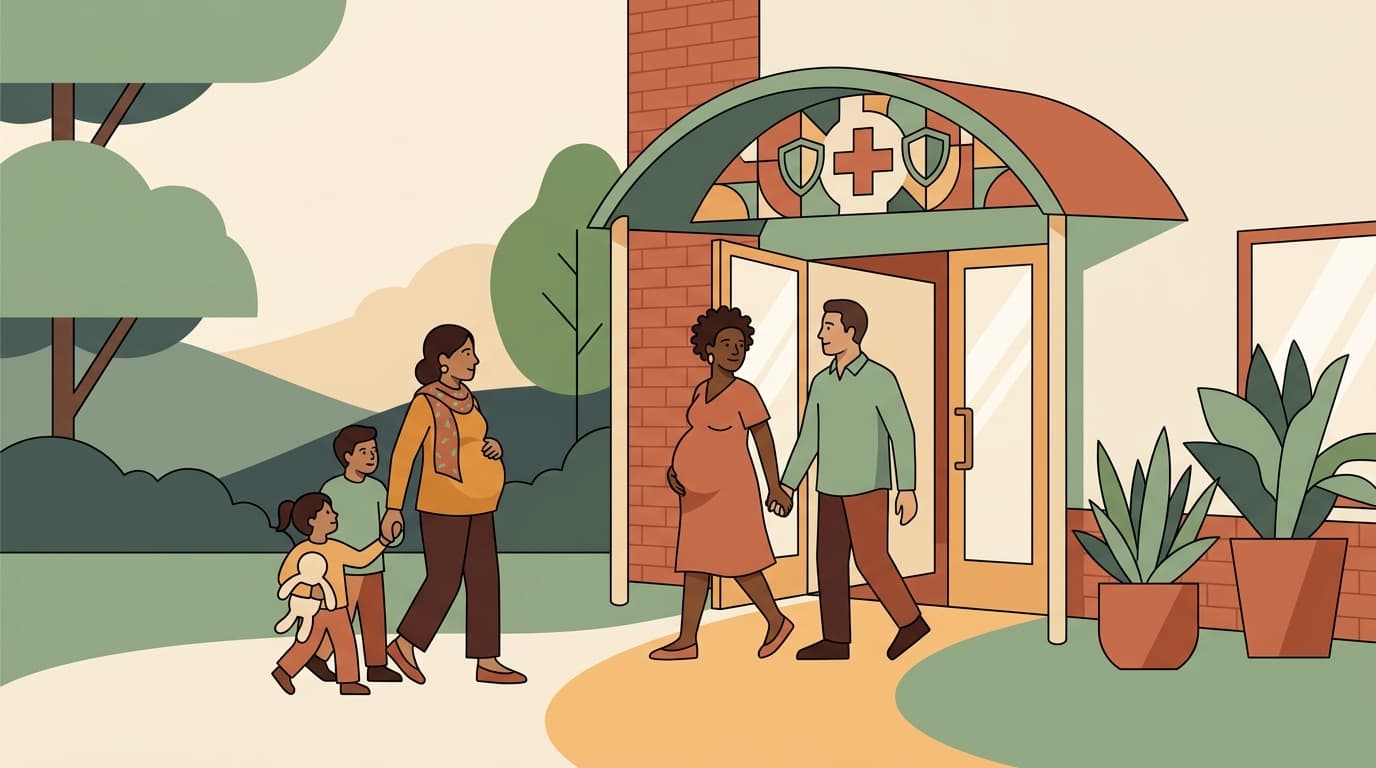
If you have delayed prenatal care because you are afraid, start here
Wanting to keep your family together is not a reason to apologize. It is a reason many people skip glucose tests, blood-pressure checks, and anatomy scans. The medical result of that choice is not a political talking point. It is later diagnosis of problems that are easier to treat when found early.
Clinicians cannot erase immigration policy. They can make the exam room a place where the only question is how you and the baby are doing. That is the point of the ACOG guidance Rose Molina, MD, MPH, reviewed for Contemporary OB/GYN.
The short version for families: hospitals and clinics are not supposed to become enforcement sites, staff should not disclose your status, and emergency labor care cannot be refused because of documentation. The longer version, with the legal distinctions staff need, follows below.
What 'sensitive space' means in a hospital
Clinical care requires trust. When people fear that seeking treatment could lead to surveillance, detention, or family separation, they stay home. ACOG practice recommendations give health systems a way to operationalize older federal sensitive-locations policies: hospitals, clinics, and emergency triage areas are places where enforcement actions should not occur except in extreme exigent circumstances (an immediate, severe emergency).
Two federal rules sit underneath the ethics. The Emergency Medical Treatment and Labor Act (EMTALA) requires hospitals to evaluate and stabilize anyone who presents in active labor or medical distress. The Health Insurance Portability and Accountability Act (HIPAA) Privacy Rule limits disclosure of protected health information, including details that would reveal immigration status, without a valid legal basis.
Together, those rules mean a laboring patient gets assessed and stabilized, and the team does not hand a citizenship file to an officer at the desk.
What happens to pregnancies when fear keeps people home
When enforcement actions rise in public awareness, maternal-child health metrics worsen. Studies show that undocumented pregnant people and mixed-status families often skip routine prenatal visits, avoid gestational diabetes screenings, and arrive at hospitals only in late, unmonitored labor.
That avoidance leads to preventable complications, including undiagnosed placenta previa (the placenta covering the cervix), uncontrolled severe preeclampsia (pregnancy-related high blood pressure with organ strain), and untreated perinatal infections. In southwestern states with large immigrant and agricultural communities, unclear clinic policies worsen those delays.
Late entry to prenatal care triples the likelihood of preterm delivery and low infant birth weight. Chronic fear-related stress raises cortisol (a stress hormone), which can increase vascular resistance and preeclampsia risk. Infants born to undocumented mothers who received comprehensive prenatal care show long-term developmental and health parity with national cohorts.
The Science Behind ItPublic areas versus private clinical space
ACOG guidance draws a hard line between public areas (lobbies and waiting rooms) and private clinical areas (exam rooms, ultrasound suites, triage bays, and labor rooms). Law enforcement officers have no legal authority to enter private clinical areas without a valid judicial warrant signed by a state or federal judge.
Think of the clinic as a house with a porch and a bedroom. The porch is public. The bedroom is not. An administrative warrant issued by an enforcement agency is a request from that agency, not a key to the bedroom.
ICE Form I-200 or I-205 is an administrative warrant. It is not a court order. It does not grant access to private healthcare spaces or confidential patient records.
Clinical Insight for ProvidersTrain the desk before you train the lecture
Most breaches happen at intake, not in a grand-rounds debate. Front-desk staff, triage nurses, and midwives need a scripted escalation: ask officers to remain in a public waiting area, notify the on-call risk manager or hospital counsel, and do not confirm whether a named person is a patient.
Do not confuse EMTALA stabilization with a duty to answer immigration questions. Evaluate and stabilize. Do not collect citizenship data you do not need. If a record already contains status information, treat it as protected health information.
Counsel with the health consequence, not a slogan. Fear-driven no-shows raise preterm birth and low-birth-weight risk. Late care triples those likelihoods in the literature summarized here. That is the clinical case for sanctuary protocols, independent of anyone's politics.
Say the privacy rules out loud at the first prenatal visit. Patients cannot use a protection they have never been told exists. Certified Nurse-Midwives are well placed to do that work because first visits are already built for time and trust.
What midwives can say in the first visit
Certified Nurse-Midwives build trust by naming privacy safeguards instead of assuming patients already know them. Useful sentences are concrete: this clinic does not ask for or record citizenship; medical interpreters are bound by professional confidentiality; health records stay protected under HIPAA.
That explicit assurance is what lets people report bleeding, headaches, or reduced fetal movement instead of waiting until the symptom becomes an emergency. The same privacy rules apply in hospital labor rooms.
In Arizona: clinic and hospital privacy
Arizona hospital birthing suites across Phoenix and the East and West Valleys follow the same federal privacy rules during prenatal care and labor. Mixed-status families already carry extra stress into those visits.
Ask the clinic to say its privacy script out loud. For local hospital-midwife practices, see the Arizona hub and directory.
Questions this headline raises
Clinical exam rooms, labor and delivery suites, and patient recovery areas are private healthcare spaces. Law enforcement personnel cannot enter these spaces without a judicial warrant signed by a court judge, which is distinct from an administrative agency warrant.