18 Million Midlife Women Overdue for Cancer Screenings: JAMA Study Reveals 50% Drop-Off in Routine Care
Millions of women in midlife have fallen behind on routine cancer checks after their childbearing years end. A large new U.S. study found that more than 18 million women ages 45 to 64 are overdue for at least one recommended screening, and that routine care drops by about half once pregnancy and family planning visits stop. That gap matters because breast, cervical, and colorectal cancers are far easier to treat when found early. The analysis, published in JAMA Network Open and summarized for clinicians by Contemporary OB/GYN, looked at civilian women across those three screening types. Certified Nurse-Midwives already provide this lifespan well-woman care, including for patients who have not had an exam in years.
Based on reporting from JAMA Network Open / Contemporary OB/GYN: Over 18 Million Midlife Women Overdue for Cancer Screenings.
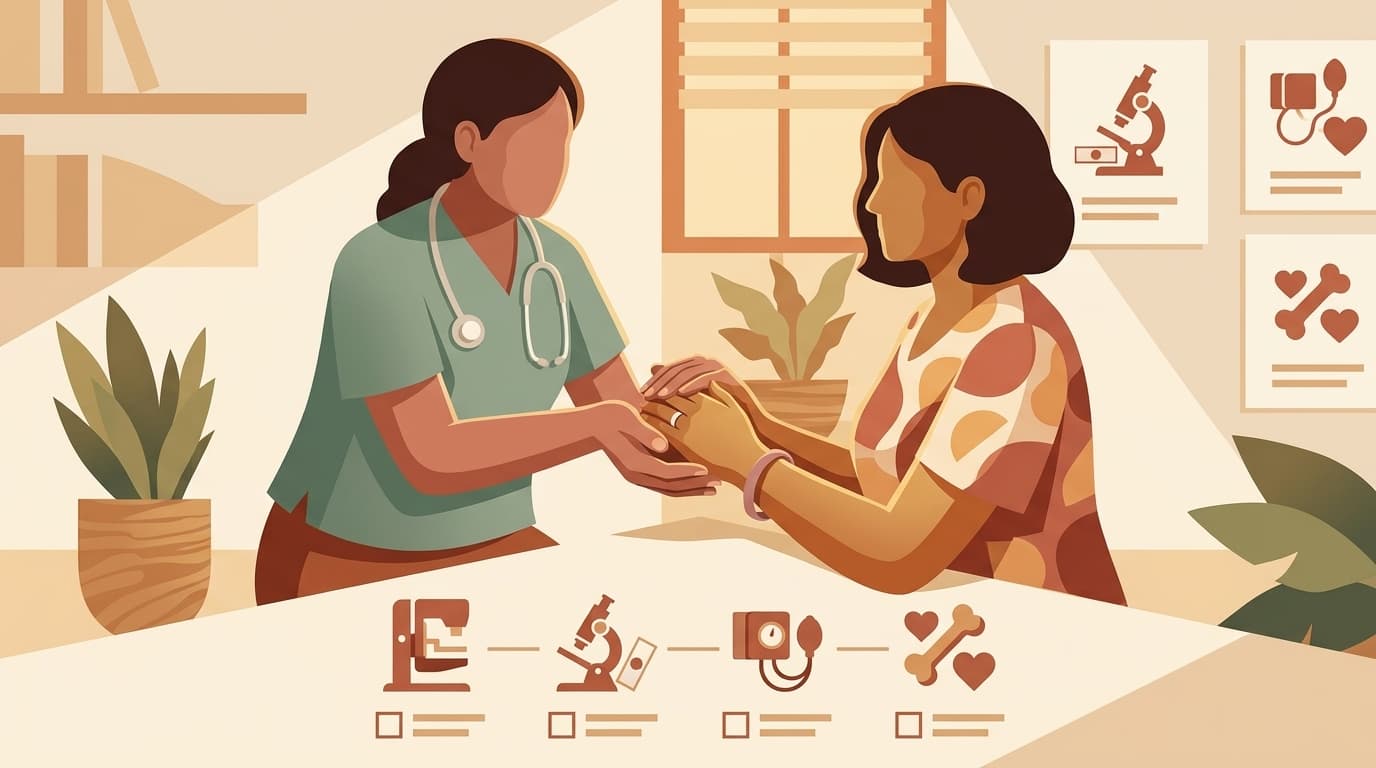
If you have put off a Pap smear or mammogram for years, start here
It is common to leave the obstetric office after a last postpartum visit and never quite find your way back to annual exams. Work, aging parents, teenagers, and a history of rushed or uncomfortable visits all compete with a 15-minute slot that used to feel optional.
That delay is not a character flaw. Many people were never told that well-woman care continues after childbearing. Others were told, then met a 10-minute visit that dismissed hot flashes, sleep trouble, or pelvic pain as 'just aging.'
A JAMA Network Open study now puts a number on the gap: more than 18 million midlife women in the United States are overdue for at least one routine cancer screening. The short version for patients: the drop-off is huge, it is expected, and you can walk back in without shame. The longer version, with screening rules and how midwives close the gap, follows below.
What the researchers measured, in plain language
Investigators ran a large cross-sectional study (a snapshot of many people at one point in time, not a years-long follow-up of the same group) of civilian women ages 45 to 64. They asked how often those women were current on three cancer checks that public-health groups treat as foundational in midlife.
The three tests were screening mammography (an X-ray of breast tissue), cervical cytology and high-risk human papillomavirus co-testing (a Pap smear plus a test for the virus that causes most cervical cancers), and colonoscopy or stool-based testing for colorectal cancer (cancer of the colon or rectum).
The finding that clinicians keep repeating is the 50% drop in preventive healthcare engagement during perimenopause and midlife. Contact stays relatively steady through pregnancy and early family planning, then falls once those visits stop.
Why visits stop after the last baby
Clinicians often call this the obstetric cliff. During childbearing years, people keep regular obstetric and contraceptive appointments. When contraception needs stabilize or someone chooses surgical sterilization, many assume annual exams are no longer required.
Competing demands make the cliff steeper. Midlife women disproportionately carry sandwich-generation responsibilities: full-time work, aging parents, and growing children. Personal healthcare is often the first appointment cancelled.
Prior harm in exam rooms also matters. Many patients describe visits that skipped consent, used cold rooms and hurried speculum exams, or waved away vasomotor symptoms (hot flashes and night sweats). Facing that again, millions skip care entirely.
The Science Behind ItThe midlife screening triad
The three screenings in the study have specific age windows. These are population recommendations for average-risk people, not a personal diagnosis. Your clinician may narrow or expand them based on family history, symptoms, or prior results.
Breast cancer screening: the U.S. Preventive Services Task Force (USPSTF) and the American College of Obstetricians and Gynecologists (ACOG) recommend biennial or annual screening mammography starting at age 40 for average-risk individuals, continuing through at least age 74. Patients with dense breast tissue (breasts with more glandular tissue that can hide a mass on a standard mammogram) or a significant family history may benefit from supplemental ultrasound or MRI.
Cervical cancer screening: current guidelines advise high-risk HPV testing alone, or co-testing with cervical cytology (Pap smear), every 5 years for individuals aged 30 to 65 with normal prior results. Regular screening finds high-grade precancerous lesions years before they become cancer.
Colorectal cancer screening: routine screening now begins at age 45 for all average-risk adults. Options include a visual exam (colonoscopy every 10 years) or non-invasive stool-based tests (annual fecal immunochemical test, also called FIT, or stool DNA-FIT co-testing every 3 years).
Clinical Insight for ProvidersDo not treat a late return as nonadherence theater
The 18-million figure is a systems problem, not a motivational-interviewing failure at the individual visit. When a 52-year-old returns after a decade without a Pap smear, the highest-yield move is a single coordinated plan: breast imaging order, cervical screening (or documented hysterectomy status), and a colorectal modality the patient will actually complete.
Name the obstetric cliff in counseling. Patients often believe well-woman visits exist only for contraception or pregnancy. Correct that belief before you list tests. Then ask about prior exam trauma. A consent-first pelvic exam, or a deferred exam with screening still ordered, keeps people in care.
Do not let a 10-minute slot erase the presenting midlife complaints that brought them back. Vasomotor symptoms, sleep disruption, and pelvic floor discomfort are clinical problems with treatments. Dismissing them as inevitable aging is one of the mechanisms that produced this dataset.
Certified Nurse-Midwives can perform clinical breast and pelvic exams, order screening and diagnostic mammograms, order colorectal kits or colonoscopy referral, and manage perimenopausal hormone therapy. A midwife-led 30- to 45-minute visit is a practical way to close the gap without inventing a new clinic.
A midwife can be your well-woman clinician for life
A common misconception is that Certified Nurse-Midwives only provide pregnancy and birth care. In reality, CNMs are nationally board-certified to deliver gynecological and primary wellness care from adolescence through menopause and after.
Midwife-led annual exams are built for time. Dedicated visits often last 30 to 45 minutes. Midwives explain each step of a physical exam, obtain explicit consent before touching, and use techniques that reduce physical discomfort.
In Arizona: CNM well-woman clinics
In Arizona, Certified Nurse-Midwives are licensed Advanced Practice Registered Nurses with independent diagnostic and prescriptive authority. Hospital-affiliated practices across Phoenix, Chandler, Gilbert, and Peoria perform clinical breast examinations, collect cervical screening specimens, order mammograms, order colorectal screening kits, and manage perimenopausal hormone therapy.
They also review cardiovascular risk, lipid panels, bone mineral density, and thyroid function. Use the Arizona hub or directory to find a clinic.
You can come back without a reprimand
Healthcare teams emphasize that people who have missed screenings for five, ten, or more years should be welcomed back without scolding. The point of a preventive visit is the next decade, not a recap of what you 'should have' done.
A single collaborative visit can rebuild a mammography schedule, update cervical records, order colorectal testing, and address persistent perimenopausal symptoms. Closing the 18-million-woman gap depends on that kind of re-entry, not on perfect lifetime attendance.
Questions this headline raises
Midlife women (ages 40 to 65) should receive regular screening mammograms for breast cancer (starting at age 40), high-risk HPV testing or Pap co-testing for cervical cancer every 5 years (through age 65), and colorectal cancer screening (starting at age 45 via colonoscopy or stool-based testing). These are average-risk recommendations. Your clinician may adjust them.