National Study: 74% of Postpartum Women Prefer Midwifery Continuity of Care to Reduce Birth Trauma
After giving birth, most women in a national survey said they wanted the same midwife, or a small known team, from pregnancy through recovery. That wish was strongest among people who had a frightening or dismissive prior birth. The finding is a demand signal: fragmented care is not what patients say they want. The Journal of Midwifery & Women's Health study found 74% preferred continuous midwifery care across prenatal visits, labor, and postpartum. Prior trauma and fear of unwanted interventions were the strongest drivers. Hospital-based Certified Nurse-Midwives can offer that continuity inside a building that still has epidurals and 24/7 physician backup.
Based on reporting from Journal of Midwifery & Women's Health (JMWH / PubMed 41014595): Women's Interest in Midwifery Continuity of Care.
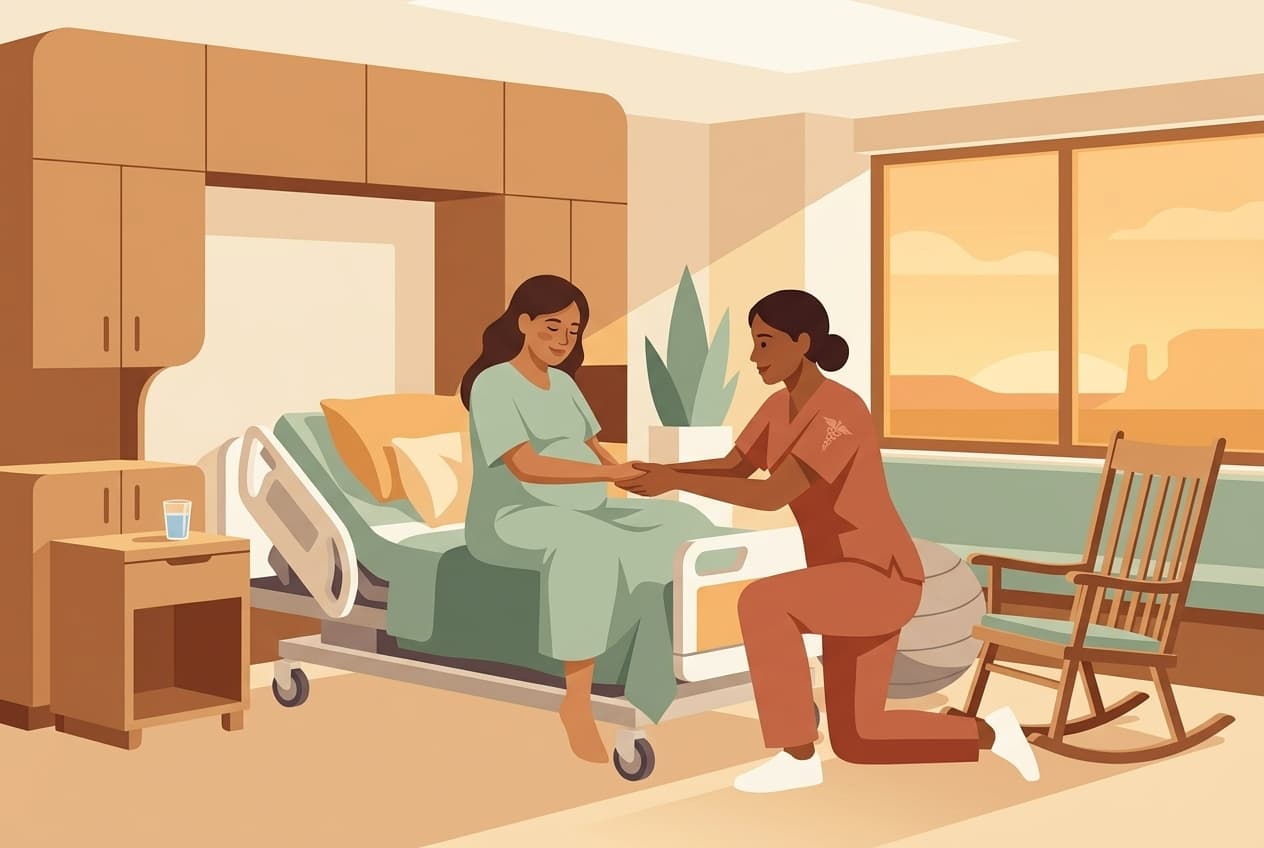
If a prior birth left you dreading the next one, start here
Wanting a familiar clinician in the room is not a luxury request. For many people it is the difference between walking into labor and bracing for it. Feeling dismissed, hurried, or touched without consent in a first birth is a common reason the second pregnancy starts with dread.
That dread is information, not weakness. It tells a care system that rotating strangers and 10-minute visits did not feel safe.
A nationwide study in the Journal of Midwifery & Women's Health (PubMed 41014595) found that 74% of postpartum respondents wanted continuous care from a known midwife across prenatal visits, birth, and postpartum. The short version: patients are asking for continuity. Hospital midwifery is one way to say yes without leaving the hospital.
What the survey measured
Investigators analyzed postpartum women's preferences about maternity-care models. Seventy-four percent expressed a clear interest in continuous care from a known midwife across prenatal visits, labor and delivery, and postpartum appointments.
That preference highlights a gap. Conventional U.S. maternity care is often split across rotating on-call physicians and unfamiliar hospital staff. Patients meet a new face at 3 a.m. and are asked to trust them with surgery-level decisions.
Trauma and fear were the strongest drivers
Previous negative births and fear of childbirth were the most powerful predictors of wanting midwifery-led care. Patients who felt unheard, rushed, or subjected to non-consensual interventions overwhelmingly favored the midwife model next time.
Midwifery care emphasizes bodily autonomy, shared decisions, and trauma-informed communication. Longer appointments, real discussion of birth preferences, and continuous bedside presence during labor are the mechanisms, not a personality type.
The Science Behind ItContinuity and intervention rates
Patient preference lines up with outcome data. Cochrane systematic reviews comparing midwife-led continuity models with other arrangements show consistent advantages for low-to-moderate risk pregnancies:
- Lower likelihood of emergency cesarean (surgical birth).
- Lower rates of instrumental vaginal birth (vacuum or forceps).
- Less routine episiotomy (a cut to the perineum) and less artificial rupture of membranes.
- Higher rates of spontaneous vaginal birth and exclusive breastfeeding initiation.
- Greater reported control and emotional well-being.
These are associations from pooled trials and reviews, not a promise that every labor will be uncomplicated. They are why health systems treat continuity as a quality intervention, not a branding exercise.
Clinical Insight for ProvidersDemand exists; staffing has to match it
A 74% preference is a service-design problem. If prenatal visits rotate among eight clinicians the patient will never meet, you are not offering the model the survey described. Build call groups small enough that every member appears in clinic before labor.
Name prior trauma in the intake, not only in a birth-plan PDF. Ask what felt non-consensual last time. Then write the opposite into orders: consent before exams, delayed cord clamping, and a named plan for pain relief without moral language.
Hospital CNMs already sit inside collaborative models in many U.S. systems. Continuity plus on-site obstetric backup is the honest product. Continuity without a cesarean pathway is not what this site describes.
In Arizona hospitals: CNM continuity with physician backup
Hospital Certified Nurse-Midwives in Phoenix, Chandler, Gilbert, and Peoria already practice inside collaborative models with epidurals, hydrotherapy, monitoring, and on-site obstetric physicians.
Ask how many midwives share call and which hospital they admit to. The Arizona hub and directory list practices that offer this model.
Three questions that test whether a practice is continuous
- Group call structure: how many midwives share hospital coverage, and do prenatal visits rotate so you meet everyone before labor?
- Labor bedside presence: when does the Certified Nurse-Midwife join you in the hospital, and do they stay for active labor, not only the delivery?
- Physician collaboration: which hospital does the practice admit to, and how does co-management work if labor needs surgical support?
Questions this headline raises
Midwifery continuity pairs patients with a known midwife or small team across pregnancy, birth, and postpartum. Research associates this model with lower cesarean rates, fewer interventions, higher vaginal birth rates, and higher patient satisfaction.