What Does a Midwife Do During Labor?
A hospital midwife is in the room for more than the last few pushes. They check you and the baby, help with positions and pain relief, deliver the baby, and stay for the first hour of bonding. The physician is still in the hospital if surgery is needed.
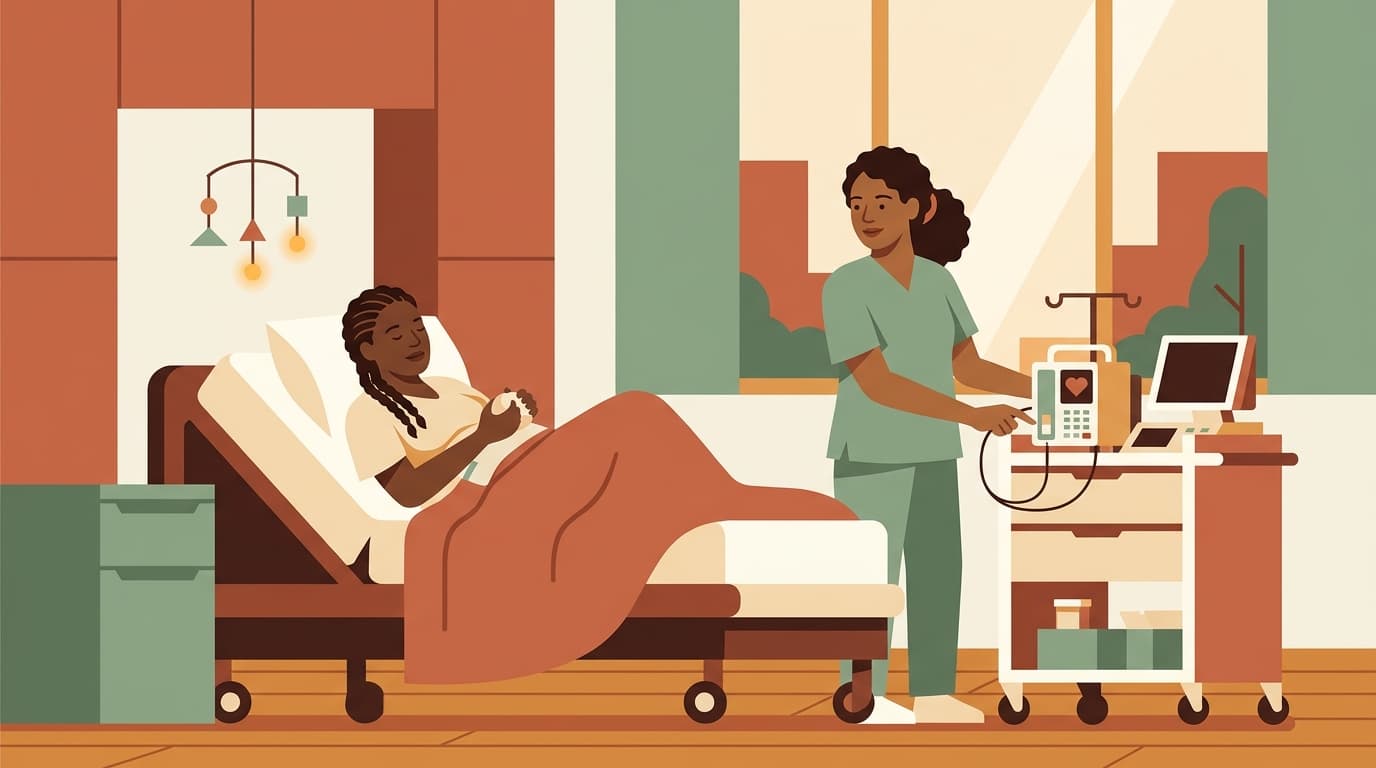
If you picture a doctor arriving only at the end, start here
That picture is why people ask this question. In a typical physician model, the obstetrician may be in clinic or the office until pushing is close. A hospital Certified Nurse-Midwife spends substantial time in the room through active labor, working with the labor nurse, and still has a surgical backup path.
Admission and early labor
On arrival the midwife confirms active labor and checks fetal well-being, reviews your prenatal record and birth preferences, and sets up the room with nursing staff. That is also when you can revisit pain-relief plans without embarrassment.
Active labor: monitoring plus bedside support
The midwife uses intermittent or continuous fetal monitoring, suggests position changes, offers hydrotherapy if you want it, orders an epidural or other medicine when you request it, and stays for encouragement that is not a drive-by visit. If a complication develops, they consult the on-site obstetrician.
The Science Behind It: pushing, the perineum, and the first hour
In the pushing phase the midwife coaches effort and uses techniques meant to protect the perineum (the tissue between vagina and anus) and keep the delivery controlled. They catch the baby, support the newborn's first minutes, and delay cord clamping when your preferences and clinical safety allow. After birth they deliver the placenta, treat bleeding, and repair tears with local anesthetic while you do skin-to-skin, often called the golden hour.
Clinical Insight for Providers: presence is a staffing choice
Families notice when the midwife is actually in the room versus 'available on the unit.' Publish the practice's labor-presence policy. Pair it with clear obstetric escalation. Continuous support plus a cesarean pathway is the hospital CNM product. Presence without documentation, or documentation without presence, is how the role gets misunderstood.
More educational guides
Educational content only. Not individual medical advice. Confirm hospital policies and your state board of nursing guidance with your care team. Sources