Midwife vs. Doula: Understanding Your Birth Team
A midwife is a medical clinician. A doula is a trained support person who does not deliver the baby or write medical orders. Many families hire both so clinical safety and continuous comfort have different owners. Confusing the two titles is how people think a doula replaces a hospital team.
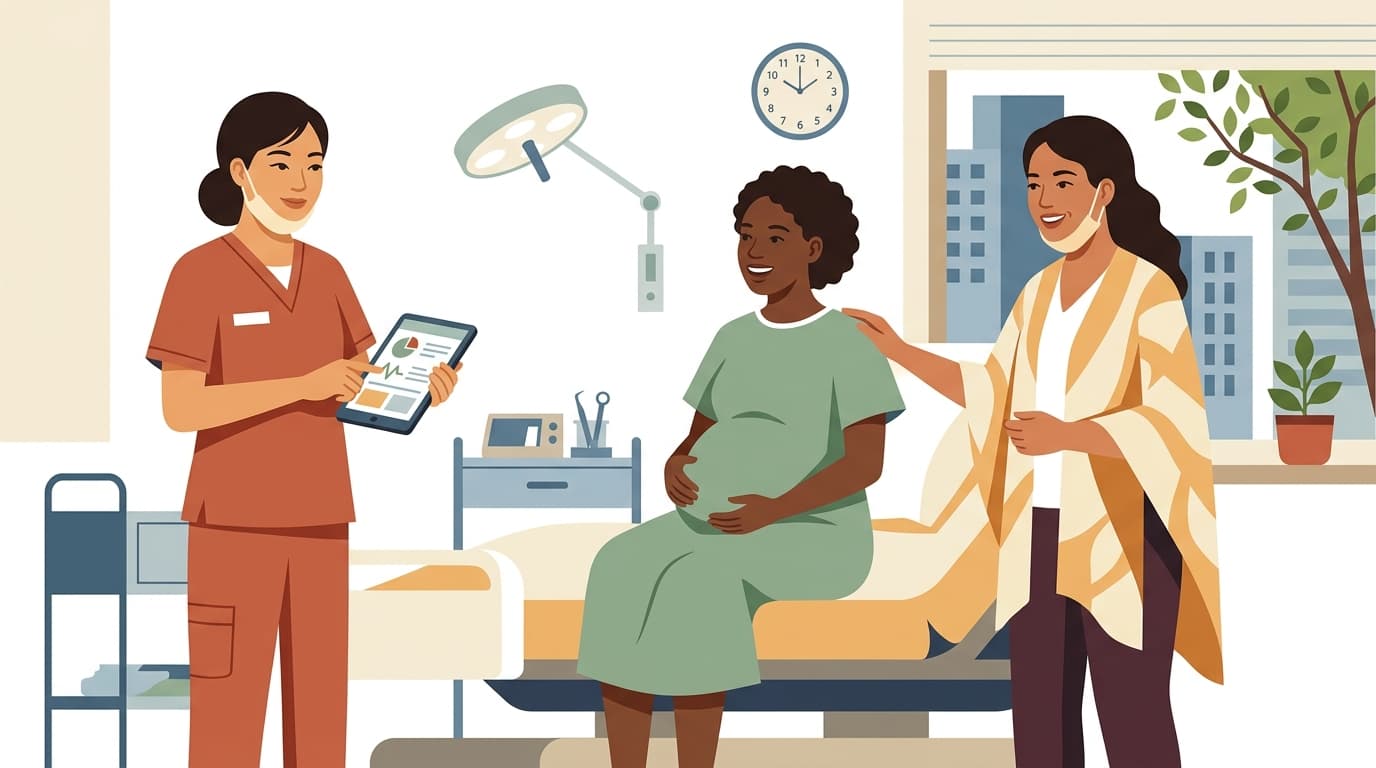
If you have been using the words interchangeably, start here
That mix-up is common and it causes real planning errors. A Certified Nurse-Midwife is responsible for the clinical health of the pregnant person and the baby. A doula provides physical, emotional, and informational support and does not perform exams, interpret fetal monitoring, or make medical decisions.
What a doula does in labor
A doula stays focused on comfort: breathing, position changes, counterpressure, massage, and helping a partner know where to stand. Doulas also help you use a written birth-preference page when the room gets loud. They do not place epidurals, catch the baby, or manage hemorrhage.
What a midwife does in labor
The Certified Nurse-Midwife monitors vital signs, reads fetal heart-rate tracings, checks cervical dilation when needed, orders pain medicine, and delivers the baby. Midwives identify complications early and consult obstetricians when surgical birth is needed. That is a license and a hospital privilege, not a coaching style.
The Science Behind It: complementary time, not competing titles
Even a high-touch midwife still documents, may cover more than one patient, and steps out for emergencies. Continuous one-to-one presence is the doula's job. Families who want both are stacking two different functions. Confirm the hospital's doula policy on the tour so the support person you hired can actually enter the unit.
More educational guides
Educational content only. Not individual medical advice. Confirm hospital policies and your state board of nursing guidance with your care team. Sources