Benefits of Midwifery Continuity of Care: Outcomes, Autonomy, and Trauma Reduction
Most women in a national postpartum survey wanted the same midwife, or a small known team, from pregnancy through recovery. That request was strongest after a frightening or dismissive prior birth. Continuity is a care design, not a personality type, and hospital midwives can offer it with physician backup still in the building.
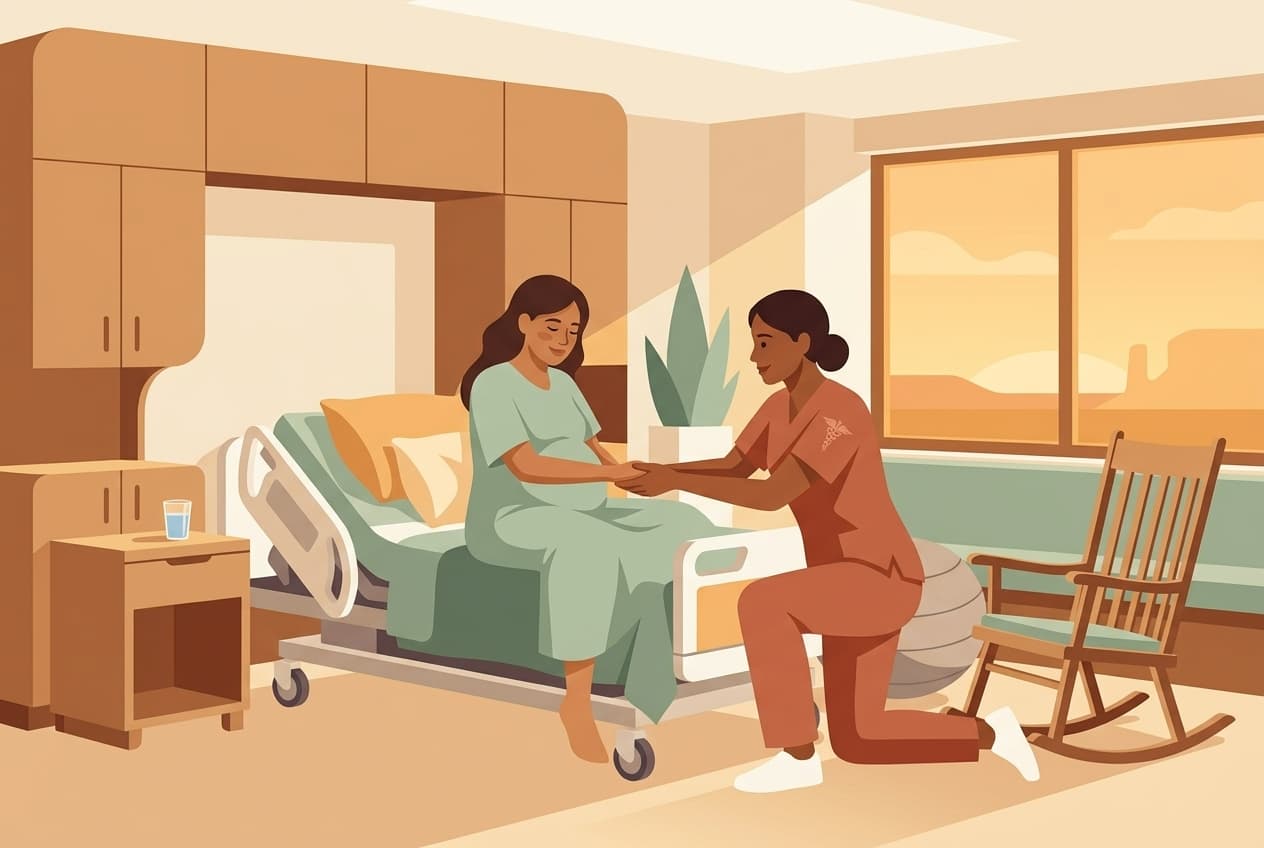
If you want a familiar clinician in the room, start here
Meeting a stranger at 3 a.m. is a common U.S. birth story. If a prior labor left you feeling unheard or hurried, wanting a known midwife next time is a safety request, not a luxury. A Journal of Midwifery & Women's Health study (PubMed 41014595) found that 74% of postpartum women wanted continuous care from a known midwife across prenatal visits, labor, and postpartum. The rest of this guide explains why that model changes both how birth feels and what the outcome data show.
What continuity actually means
Continuity means you know the person (or the small team) who will attend your labor before contractions start. Prenatal visits are long enough to talk about prior trauma, pain-relief preferences, and hospital logistics. On labor day, the midwife is not dropping in only for the delivery. That is the opposite of a rotating on-call physician you have never met.
The Science Behind ItCochrane outcomes and the 74% preference
The 74% preference lines up with pooled trial evidence. Cochrane systematic reviews (analyses that combine multiple randomized studies) of midwife-led continuity models show lower emergency cesarean rates, fewer vacuum or forceps births, less routine episiotomy (a cut to the perineum), higher spontaneous vaginal birth, higher exclusive breastfeeding initiation, and higher reported control. These are population-level associations for low-to-moderate risk pregnancies, not a guarantee that every labor will be uncomplicated.
Clinical Insight for ProvidersSmall call groups or it is not continuity
If eight clinicians share call and the patient meets two of them, you are not delivering the model the survey described. Keep the call group small enough that every member appears in clinic. Ask about prior non-consensual exams at intake and write the opposite into orders. Hospital Certified Nurse-Midwives already practice inside collaborative models; the missing piece is usually scheduling, not ideology.
In Arizona hospitals: continuity with physician backup
Hospital-based Certified Nurse-Midwifery practices in Phoenix, Chandler, Gilbert, and Peoria pair relational continuity with a full labor-unit safety net. Patients labor in private rooms with access to hydrotherapy, wireless monitoring, and epidurals, while an obstetric physician remains available for consultation or cesarean if needed. Ask how many midwives share call and use the Arizona hub or directory to find a local group.
Looking for a credentialed Certified Nurse-Midwife near you?
Certified Nurse-Midwives (CNMs) practice in leading hospitals, health systems, and birth centers across all 50 states. Use the American College of Nurse-Midwives national directory to locate board-certified practitioners in your area.
More educational guides
Educational content only. Not individual medical advice. Confirm hospital policies and your state board of nursing guidance with your care team. Sources